Key Takeaways
- Strategy + Execution: A full brand identity package combines brand strategy and visual execution — most agencies only deliver the visual layer.
- Logic First: Brand strategy, including positioning, competitor analysis, and messaging, must precede design or creative decisions will lack direction.
- Core Components: A professional package includes a logo system, colour palette, typography, visual language, guidelines, and collateral.
- Quality Selection: Choosing a strategy-led agency over a template-based one prevents costly rebrands and ensures market differentiation.
- Package Gaps: Logo-only and mid-tier visual identity packages lack the strategic foundation needed for sustainable brand performance.
Introduction
Most businesses think branding means getting a logo made. Pick some colours, choose a font, and you're done. But that's not branding. That's decoration.
A real brand identity package is built on something most agencies skip entirely: strategy. Before a single design decision gets made, there's a layer of work that determines who your brand is, where it sits in the market, and why anyone should care.
This guide breaks down both layers, from strategic foundations to visual execution, so you know exactly what you're evaluating when comparing agencies.
What is a Brand Identity Package?
A brand identity package, sometimes referred to as a corporate identity package or business branding package, is the complete set of strategic and visual elements that define how your business presents itself and how it's perceived.
Branding is not a logo. A logo is one output of branding. Your brand identity is the full system behind it: the positioning, the visual language, the messaging, and the guidelines, all working together to create a consistent experience across every touchpoint.
Think of it like a building. The logo is the front door. The brand identity package is the architecture, the foundation, and the floor plan. Without the structure, the door leads nowhere.
What is Included in a Full Brand Identity Package?
A full brand identity package covers two distinct layers: the strategy that guides every decision and the execution that brings it to life. Most agencies only sell you the second one.
1. Brand Strategy Foundations (The Most Overlooked Layer)
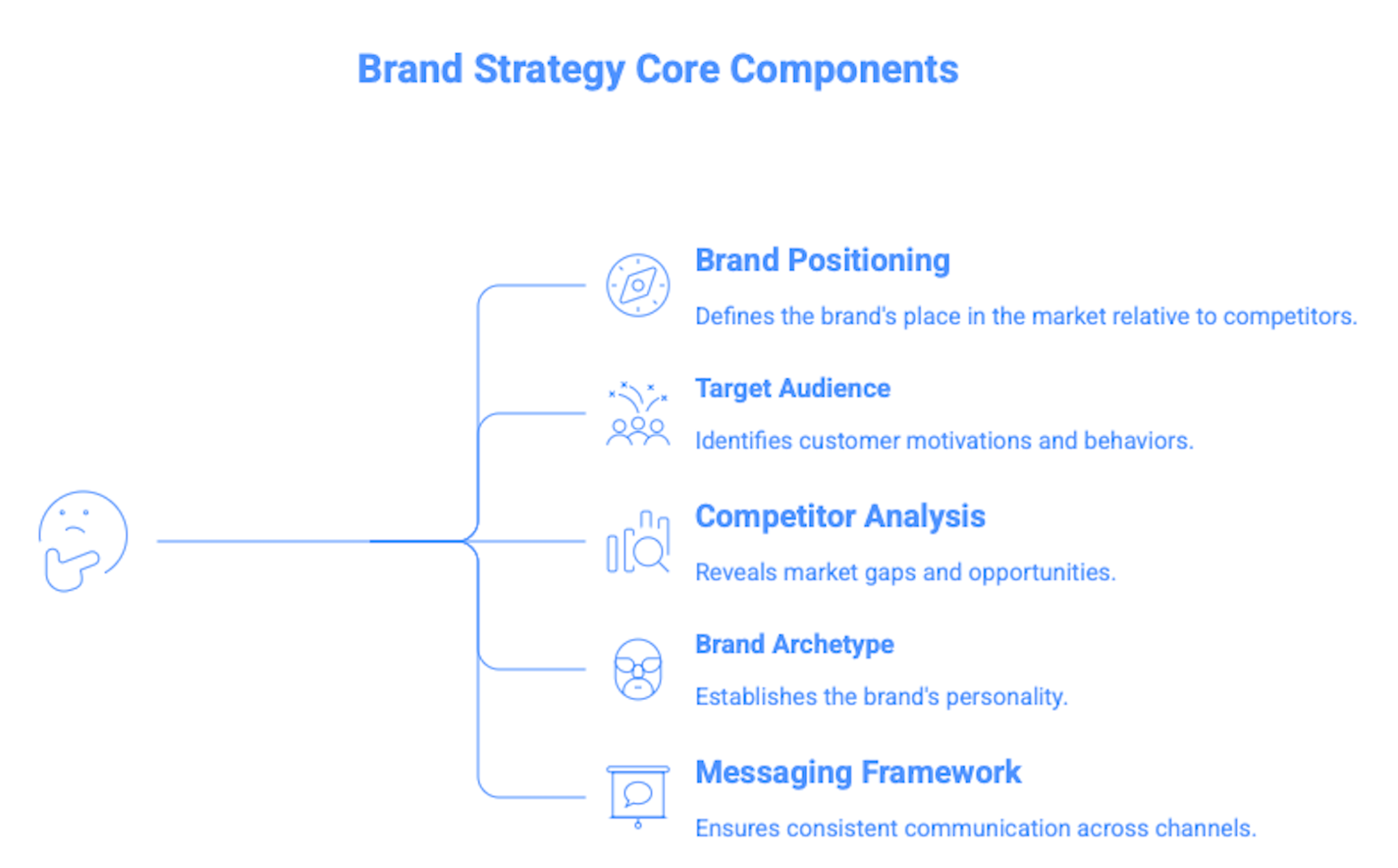
Image: Brand Strategy Core Components
This is where the real work happens, and where most agencies cut corners. Before any design begins, a strategy-led agency will map where your brand stands in the market, identify the gaps competitors have left open, and define a position your brand can own.
The core components include:
- Brand positioning: Where do you sit relative to competitors, what do you stand for, and who are you standing in front of? This shapes everything that follows.
- Target audience definition: Not just demographics. A proper audience profile digs into motivations, pain points, and buying behaviour.
- Competitor analysis: What are other brands in your space saying? The white space in your industry is often where the strongest brand positions live.
- Brand archetype: A framework that defines your brand's personality (e.g., the expert, the challenger, or the trusted guide).
- Messaging framework: Your brand's core messages, tone, and story across every channel.
Without this layer, design is just guesswork.
2. Visual Identity System (Execution Layer)
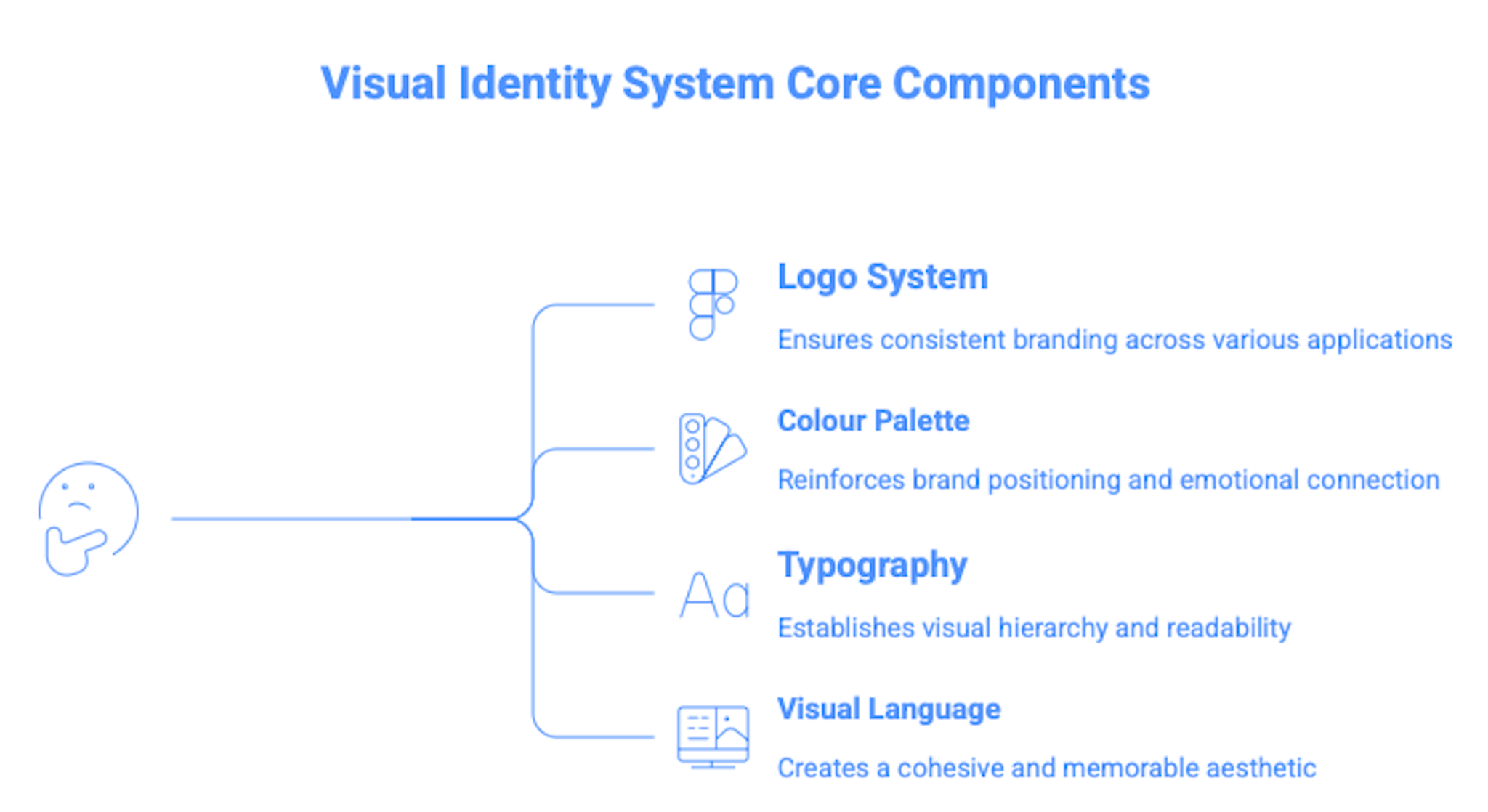
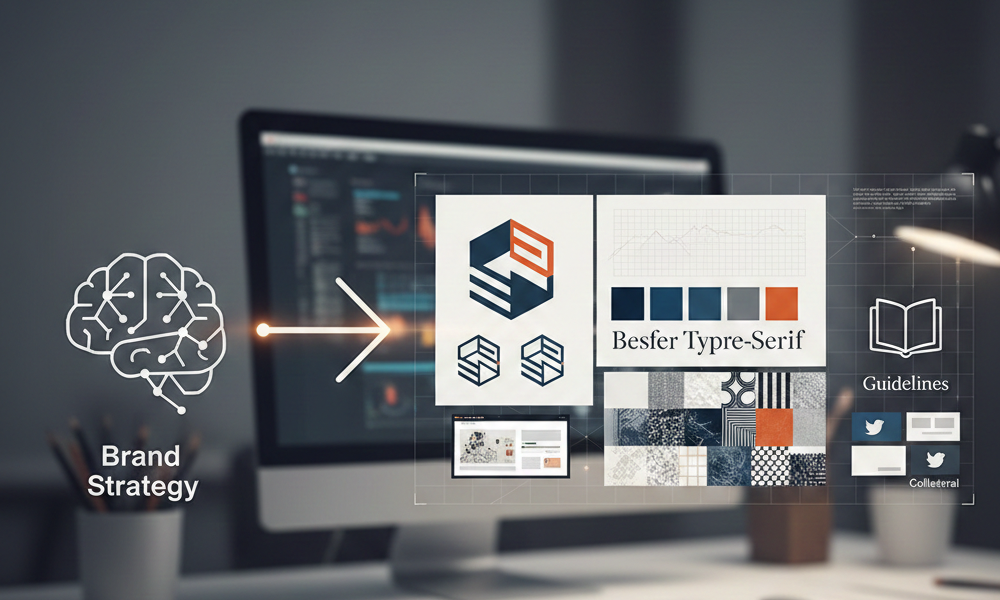
Image: Visual Identity System
Once the strategy is locked in, design can begin. A full visual identity design package includes:
- Logo system: A complete suite covering your primary logo, alternate lockups, standalone icons, and versions for different backgrounds.
- Colour palette: Defined codes (HEX, RGB, CMYK) with guidance on how each colour is used to reinforce your positioning.
- Typography: Typeface choices and the hierarchy for how they're applied across headings, body copy, and captions.
- Visual language: The overall aesthetic direction, covering imagery style, graphic elements, and the look and feel that ties everything together.
3. Brand Guidelines and Design System
Brand guidelines document the rules: how your logo can and can't be used, which colours go where, and how all your elements work together across formats.
A full brand identity package with guidelines is what keeps your brand looking like itself, whether it shows up on a billboard, a social post, or a pitch deck. As your team grows, guidelines become the single source of truth everyone works from.
4. Brand Collateral and Applications
This is where your identity meets the real world. A brand assets package can include:
- Business cards and stationery.
- Social media templates.
- Packaging design.
- Website UI direction and design system.
- Presentation decks and pitch templates.
- Email signatures and internal communications.
Why Brand Strategy Comes Before Design
Here's a scenario that plays out more often than it should: A business hires an agency, gets a logo back within two weeks, and feels good about it. Then six months later, the brand still isn't landing. The messaging feels off. The visuals don't match what the company actually does. Nobody can pinpoint why.
The reason, almost always, is that the design came before the thinking. Strategy is what gives design its direction. It answers the questions that design alone can't: Who are we talking to? What do we want them to feel? What makes us different from the five other options they're considering?
Template-based agencies fall short here. If the same visual libraries are being used across every client, the output won't be yours; it'll look like everyone else in your industry. A strategy-led approach takes longer upfront, and that's the point. The time spent on research is what prevents an expensive rebrand a year later.
How Brand Identity Packages Differ (Basic vs. Full vs. Strategic)
Not all brand identity packages are built the same:
Basic: Logo-Only Packages
Often sold as a basic branding kit, this gives you a logo and a few file formats. For very early-stage businesses, it might be enough to get started, but it leaves you without the tools to stay consistent or differentiate as you grow.
Mid-Tier: Visual Identity Kits
A mid-tier identity design package adds a colour palette, typography, and basic guidelines. The visual system is more complete, but the strategy layer is usually still missing.
Full: Strategy + System + Rollout
A complete brand identity starts with strategy, covers the full branding kit, includes guidelines, and extends into collateral and rollout support. Every design decision is traceable back to a strategic rationale.
How to Choose the Right Brand Identity Package for Your Business?
The right package depends on where your business is and where it's going:
If you're a startup: Strategy matters more at this stage than most founders expect. You're entering a market without an established reputation, so your brand has to do the heavy lifting from day one. A startup branding package that skips the strategy layer won't cut it. Read more in our guide on branding for startups in Malaysia.
If you're an SME looking to grow: You probably already have brand assets, but are they working? Inconsistent messaging or declining lead quality are signs that the strategic foundation needs attention. A proper branding package for small business owners addresses this. Check out our website branding guide for small businesses and web design for small business.
If you're an established business: Rebranding services at this level are less about starting from scratch and more about realignment as markets shift.
Red Flags to Watch For When Choosing an Agency
- They lead with design samples before asking about your business.
- There's no discovery or research phase in their process.
- They can't explain the reasoning behind their design decisions.
Choosing the right agency is as much about their process as their portfolio. Our articles on choosing the right branding agency in Malaysia and how to work with a website branding agency are good places to start.
What Does Bike Bear's Brand Identity Package Offer?
At Bike Bear, brand strategy comes before everything else. Not as a formality, but as the very foundation on which the project is supported. Our brand design services are built around structured strategy workshops before any design begins.
We offer custom branding solutions tailored to where your business is now and where it needs to go. The goal isn't just a completed logo suite; it's a brand that earns recognition and attracts the right clients. Learn more about working with a web design agency to see how we integrate strategy across all channels.
Bike Bear Brand Identity Package Examples
POPO
POPO is one of Malaysia's most recognisable childhood snack brands. The challenge was translating its existing brand equity onto Instagram. Bike Bear defined POPO's brand personality as friendly, affable, and distinctly Malaysian, then built a visual and tonal direction around it. The approach leaned into nostalgia, using familiar local settings to create content that felt as iconic as the snack itself.
Read the POPO branding case study.
Locus-T
Locus-T is an expert in SEO and SEM, but their identity was too generic to stand out. Bike Bear started by defining their brand personality and story. The tagline, "Thrive Together", was crafted to capture their character, and the hyphen in Locus-T was replaced with an upward arrow symbol, visually embedding their mission into the mark.
Conclusion
A brand identity package is only as strong as the thinking behind it. The logos and colour palettes are outputs. What makes them work is the strategy that came before: the positioning, the audience clarity, and the competitive research. That's the part most agencies skip, and it's the part that determines whether a brand actually performs in the market.
At Bike Bear, we work as a long-term partner, not a one-time vendor. Ready to figure out what your brand actually needs? Let's talk.